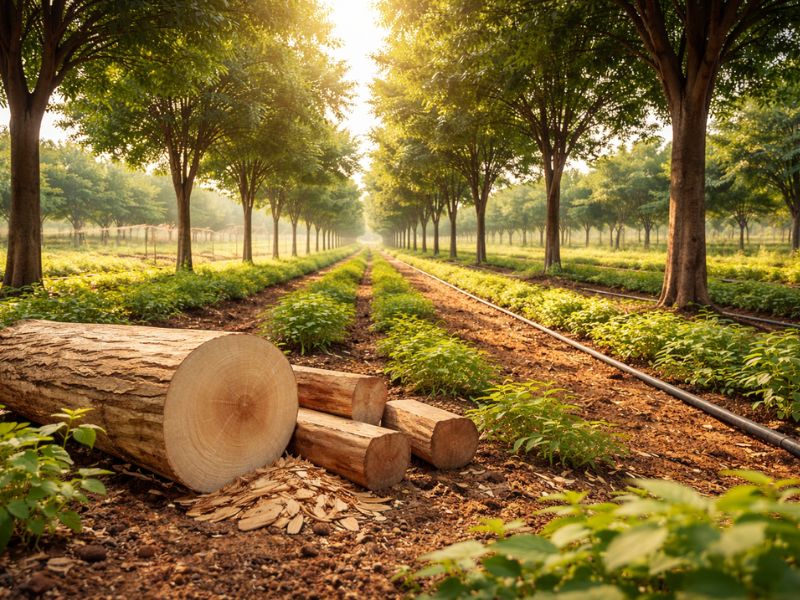
In India, land and trees have always been seen as reliable long-term assets. Among plantation crops, sandalwood stands apart due to its high economic value, limited availability, and long history of demand. Indian sandalwood is one of the most valuable tree species in the world, known for its fragrant heartwood and essential oil.
With rising interest in real assets and sustainable investments, sandalwood cultivation has gained attention from investors looking beyond short-term financial products. Managed sandalwood farmland combines agricultural land ownership with a high-value tree crop, offering long-term wealth creation supported by biological growth rather than market speculation.
Why Sandalwood is a Unique Asset
Sandalwood is considered unique because of its slow growth and rarity. The tree typically takes 15 to 20 years to reach harvest maturity, during which its heartwood continues to increase in value. Unlike seasonal crops, sandalwood does not depend on annual yields. Its value is stored within the tree itself.
In India, sandalwood has deep cultural and religious significance. It has been used for centuries in temples, rituals, Ayurveda, and traditional ceremonies. Economically, its heartwood and oil are used in perfumery, cosmetics, pharmaceuticals, and wellness products, ensuring steady demand across multiple sectors.
Historical Performance of Sandalwood Investments
Historically, sandalwood prices have remained strong due to restricted supply. Overharvesting of natural sandalwood forests in the past led to strict regulations and a sharp decline in wild sources. As a result, legally grown plantation sandalwood has become the primary source of supply.
Research by Indian forestry institutions shows that plantation-grown sandalwood has delivered consistent long-term returns when cultivated under proper management. The combination of controlled supply and sustained demand has helped sandalwood maintain price stability over decades.
High Demand and Market Value
Global and Domestic Demand for Sandalwood
Sandalwood is used in a wide range of industries. In the fragrance industry, sandalwood oil is valued for its long-lasting base note and blending qualities. In cosmetics and skincare, it is known for its cooling, anti-inflammatory, and antimicrobial properties.
Traditional medicine systems such as Ayurveda and Traditional Chinese Medicine use sandalwood for therapeutic purposes, including skin care and stress-related treatments. In India, religious and cultural usage continues to support strong domestic demand, particularly for sandalwood paste, incense, and carvings.
Price Appreciation Over Time
Sandalwood prices have shown long-term appreciation due to a clear gap between demand and supply. Because new plantations take many years to mature, supply cannot increase quickly. This naturally supports price growth over time.
High-quality Indian sandalwood heartwood and pure oil fetch premium prices in both domestic and export markets. As natural forest sources decline further, plantation-grown sandalwood is expected to play an even more important role in meeting future demand.
Low Maintenance, High Returns
Minimal Day-to-Day Management
After the initial establishment phase, sandalwood trees require relatively low daily maintenance compared to many agricultural crops. When grown under a managed plantation model, activities such as irrigation, pest control, pruning, and compliance are handled by professional teams.
This structure allows investors to benefit from agricultural ownership without the need for regular on-ground involvement, making sandalwood suitable for working professionals and long-term planners.
Steady Revenue from Mature Trees
The main financial return from sandalwood comes at maturity, when heartwood formation is complete. Each mature tree contains commercially valuable heartwood, which is sold through regulated channels.
Sustainable harvesting practices ensure legal compliance and help maintain long-term plantation value. Since sandalwood is a high-value crop, even moderate plantation sizes can generate significant returns at harvest.
Strategic Investment Advantages
Diversification of Asset Portfolio
Farmland and plantation investments provide diversification because they are not directly linked to stock markets or financial instruments. Sandalwood plantations combine land appreciation with the growth of a valuable tree crop, offering dual asset protection.
For Indian investors, this aligns well with traditional preferences for tangible assets backed by land ownership
Hedge Against Inflation and Market Volatility
Real assets such as agricultural land and timber have historically acted as a hedge against inflation. As input costs and commodity prices rise, the value of mature sandalwood trees tends to increase
Because sandalwood investments are long-term in nature, they are less affected by short-term market fluctuations, providing stability during periods of economic uncertainty.
Government and Legal Support
Regulations Favoring Sustainable Sandalwood Plantations
In recent years, Indian state governments have amended forest laws to encourage private sandalwood cultivation. These reforms allow individuals and companies to grow sandalwood on private land, subject to registration and transit rules.
The objective is to reduce pressure on natural forests and promote sustainable plantation-based production. Clear guidelines for harvesting and transportation have improved transparency and investor confidence
Incentives for Long-Term Investors
Several states offer support in the form of subsidised saplings, technical guidance, and inclusion under agroforestry schemes. Sandalwood cultivation is also aligned with national policies promoting long-term tree-based agriculture and sustainable land use.
Such initiatives reduce regulatory risk and support investors who are willing to commit to long-term plantation development.
Sandalwood investment offers a rare combination of land security, long-term value creation, and stable demand. With legal support, limited supply, and strong cultural relevance in India, managed sandalwood farmland remains a practical choice for investors seeking steady growth, portfolio diversification, and protection against inflation over time.