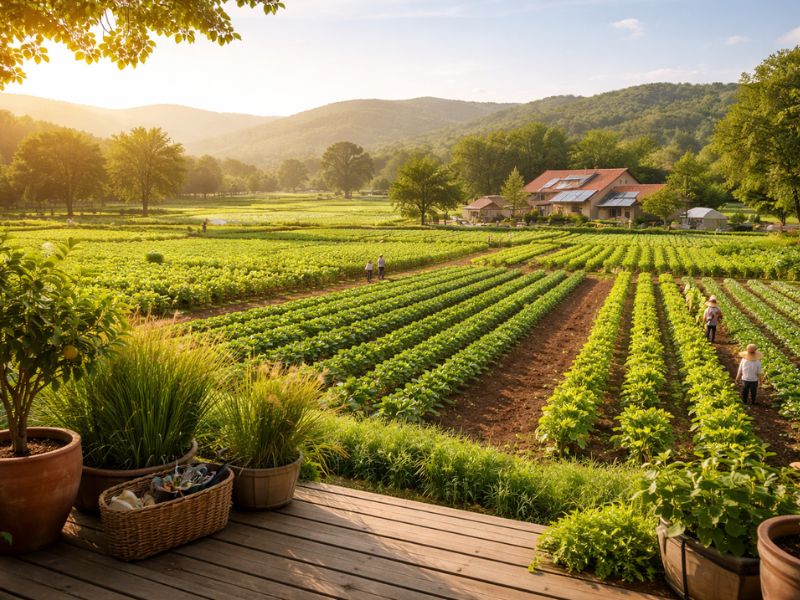
Interest in farmland as an investment has grown steadily in India. Rising land prices, food security concerns, and a shift toward real assets have pushed many investors to look beyond stocks and apartments. Alongside this trend, the idea of “zero-maintenance farmland” has gained attention.
It sounds simple, even attractive. But it is important to set expectations early. Zero-maintenance does not mean zero involvement. It means the investor is free from day-to-day farming responsibilities while professionals handle operations. The investor’s role is strategic, not operational.
What Is Zero-Maintenance Farmland?
In simple terms, zero-maintenance farmland is agricultural land owned or leased by an investor but managed entirely by professionals.
Instead of personally dealing with crops, labour, irrigation, or local compliance, the investor partners with a farm operator, agri-company, or managed farmland developer. These professionals take care of farming activities, while the investor benefits from land ownership and potential income.
This model differs from traditional farmland ownership in India, where owners often manage the land themselves or rely on informal arrangements with local farmers. In zero-maintenance setups, management is structured, documented, and usually backed by contracts.
The investor retains ownership rights or a defined stake, while experienced operators handle cultivation, maintenance, and sometimes even marketing of produce.
Why Farmland Is Attracting Passive Investors
Farmland has always held value in India. What’s changing is how investors access it.
A few key reasons explain the growing interest:
- Agricultural land tends to appreciate over the long term, especially near developing corridors or water-secure regions
- Demand for food remains steady regardless of economic cycles
- Farmland often shows lower volatility compared to equities
- It has natural inflation-hedging qualities, as crop prices and land values tend to rise over time
For investors seeking stability rather than speculation, farmland offers a grounded alternative to more volatile assets.
How Zero-Maintenance Farmland Actually Works
The structure varies, but the mechanics are fairly straightforward.
Investors may buy land outright, participate in fractional ownership, or lease land under long-term agreements. Income can come from fixed lease rentals or from revenue-sharing models linked to crop performance.
Farm operators or management firms handle planning, cultivation, labour, irrigation, compliance, and reporting. Investors typically receive periodic updates rather than daily involvement.
Most farmland investments are long-term by nature. A holding period of five to ten years is common, allowing both land appreciation and operational returns to play out.
Transparency at this stage matters. Clear documentation and defined roles help build trust.
What “Zero Maintenance” Does — and Does Not — Mean
This is where clarity is essential.
What investors do not handle includes daily farming work, hiring labour, managing equipment, dealing with local authorities, or monitoring crops on a daily basis.
What still requires attention includes reviewing legal documents, understanding the ownership structure, tracking performance reports, and planning exits when needed.
“Zero maintenance” is best understood as professionally managed farmland. The responsibility is reduced, not eliminated. A serious investor still stays informed, even if they are not hands-on.
Income Potential and Return Expectations
Returns from farmland tend to be steady rather than dramatic.
Lease-based models offer predictable income, while crop-linked models can fluctuate based on yield and market prices. Returns depend on multiple factors, including crop selection, soil quality, water access, climate conditions, and the competence of the management team.
Risks Investors Should Understand
Like any real asset, farmland carries risks.
Weather patterns and climate variability can impact yields. Crop prices may fluctuate due to market conditions. There is also operator risk, where poor management affects outcomes.
Liquidity is another consideration. Farmland is not as easy to exit as listed securities. Regulatory factors, zoning rules, and land-use restrictions also require attention, especially in different Indian states.
Understanding these risks upfront leads to more confident decisions.
Who Should Consider Zero-Maintenance Farmland Investing
This model suits investors with a long-term horizon who value diversification.
It works well for those who want exposure to agriculture without being physically involved, and for investors comfortable with moderate liquidity constraints. It also appeals to individuals seeking a balance between financial returns and tangible asset ownership.
For many, farmland represents both investment and legacy.
How to Evaluate a Zero-Maintenance Farmland Opportunity
Due diligence makes the difference between a good idea and a sound investment
Key points to review include the track record of the operator, land quality, soil and water availability, and the legal ownership structure. Exit options should be clearly defined, and reporting should be regular and transparent.
In India, clarity on land titles and compliance with local laws is especially important.
Projects that combine professionalism with transparency tend to stand out.
Is Zero-Maintenance Farmland Right for You?
Zero-maintenance farmland offers clear benefits: reduced involvement, professional management, long-term appreciation, and diversification. The trade-offs include limited liquidity and dependence on operators and natural factors.
The right choice depends on personal goals, time horizon, and risk comfort.
At Shondik Living, we craft farm projects with passion, sustainability, and legacy in mind. By offering managed farmland experiences, the focus goes beyond returns to building long-term value and a deeper connection to land.
For investors who think long-term and value stability, zero-maintenance farmland can be a thoughtful addition to a balanced portfolio.